My role: solo founder — product, design, and engineering end to end.
The product
Workin.archi is a job marketplace dedicated to architecture, urbanism, and design careers in France. It connects three audiences: candidates, who build a public portfolio-profile instead of a plain CV; recruiters and agencies, who post jobs and source candidates; and architecture schools, who manage their own alumni networks. Its differentiation from a generic job board comes from this candidate/recruiter/school triangle, plus a referral layer grafted onto recruiting.
Personas
- Candidate (architect, designer, urbanist) — build a public portfolio-profile, get discovered by recruiters, apply to jobs.
- Recruiter / agency — post jobs, source candidates, run internal referrals to hire faster.
- School admin — manage the alumni directory, approve membership requests, publish events and job posts.
- Referrer (an employee at a company) — refer a candidate for a reward, track that referral through to hire.
Key screens
| Screen | Audience | What it does | Product decision |
|---|---|---|---|
| Public profile | Candidate + anyone with the link | An online portfolio (projects, CV, software, availability) | A public identifier, viewable without login: the profile becomes something shareable outside the platform, not just a locked-in account |
| Profile onboarding | Candidate | Guided, multi-step completion (photo, experience, software, project, CV) | Completion is built around exactly the fields recruiters filter on — candidate activation is directly tied to search visibility |
| Job listings | Candidate | Browse and apply to jobs, some employer-posted, others aggregated | Chose to bootstrap supply through aggregation before recruiters pay to post — solving a marketplace's classic chicken-and-egg problem |
| Recruiter portal | Recruiter | Post jobs, review applicants, run referrals | Built and iterated separately from the candidate product, so it could be tested faster without destabilizing the candidate experience — currently paused in production while the candidate/school side takes priority |
| Referral | Referrer, candidate, recruiter | Refer a candidate, track the referral's status | A growth lever borrowed from B2B, applied to recruiting, to cut recruiters' cold-sourcing cost |
| School / alumni | School staff, alumni | Preview of the inter-school alumni network: directory, news, events | Building this as a shared cross-school layer rather than one dashboard per school, so network effects compound instead of fragmenting per institution |
Screenshots
(live captures from workin.archi in production, logged in with my own account; names belonging to other users are blurred)
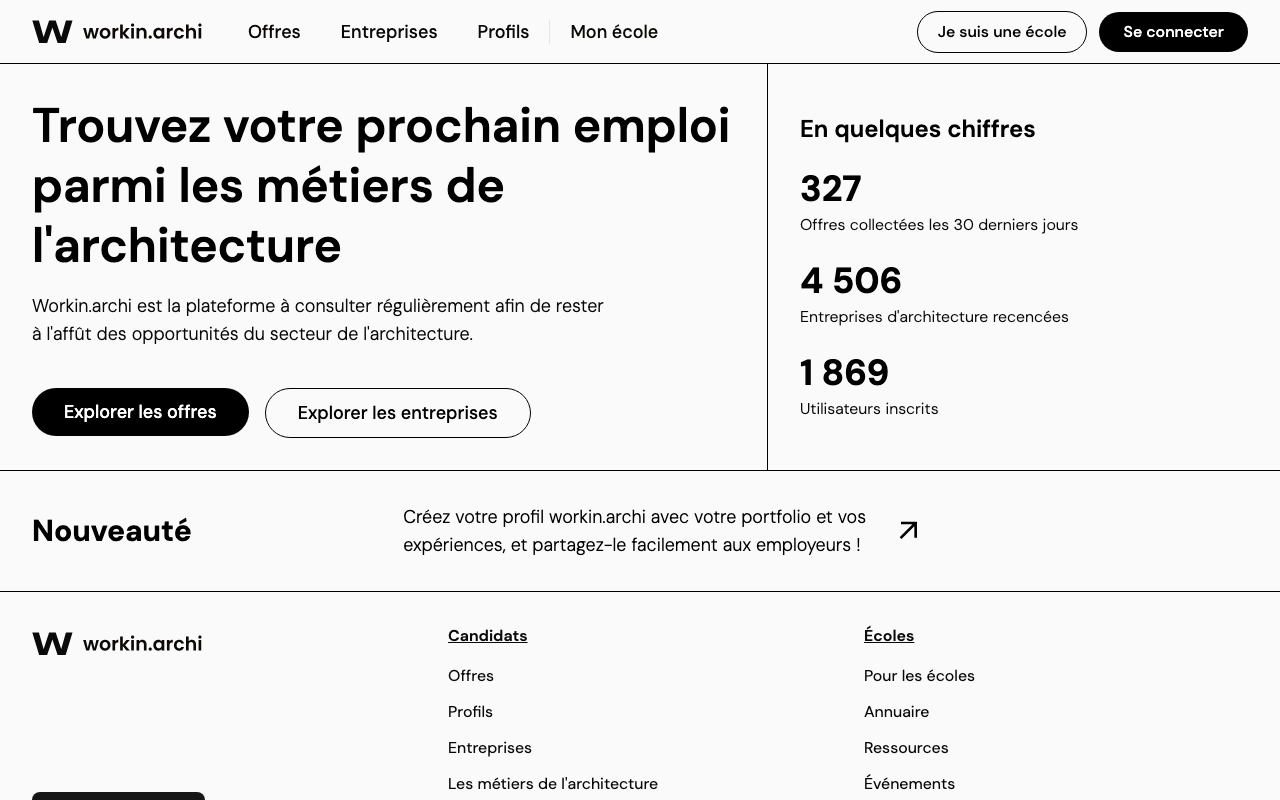 Homepage — the marketplace's real-time numbers: job count, companies, registered users.
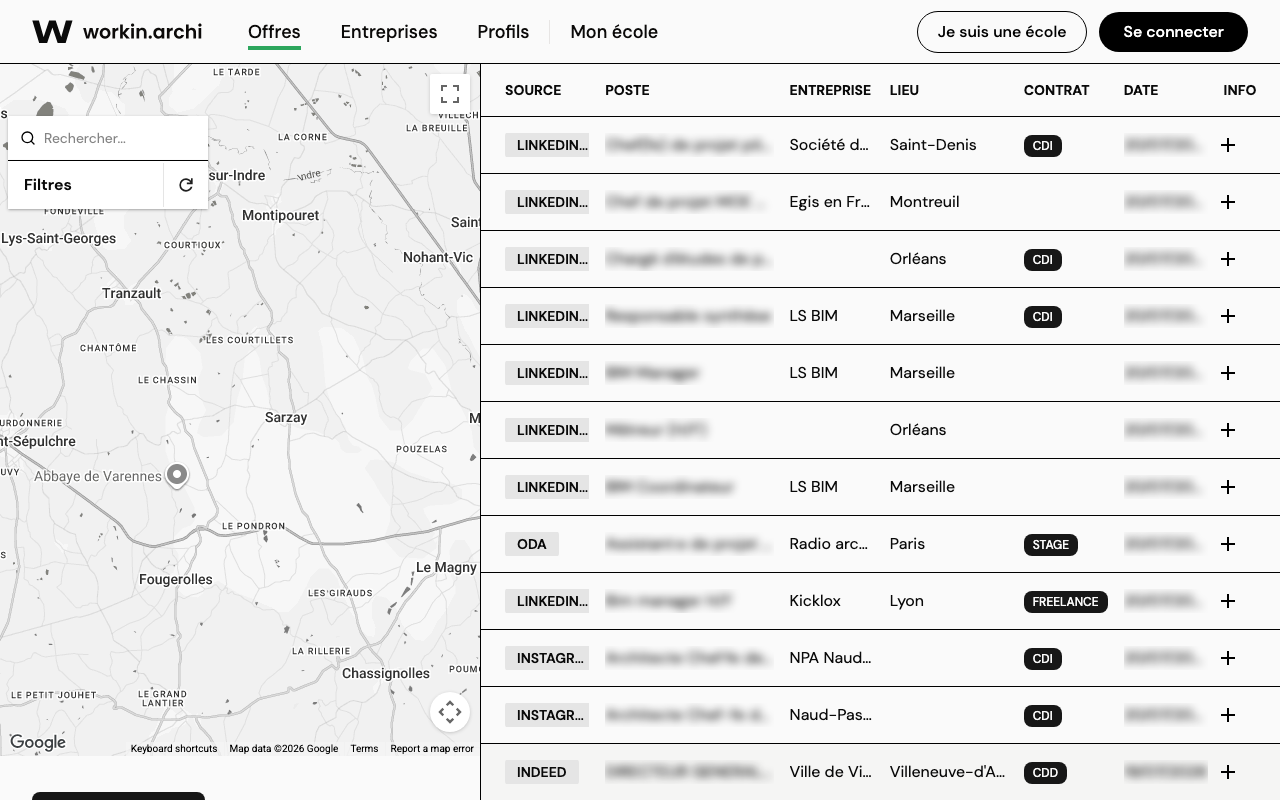 Job listings — aggregated and employer-posted jobs, filterable by location and contract type.
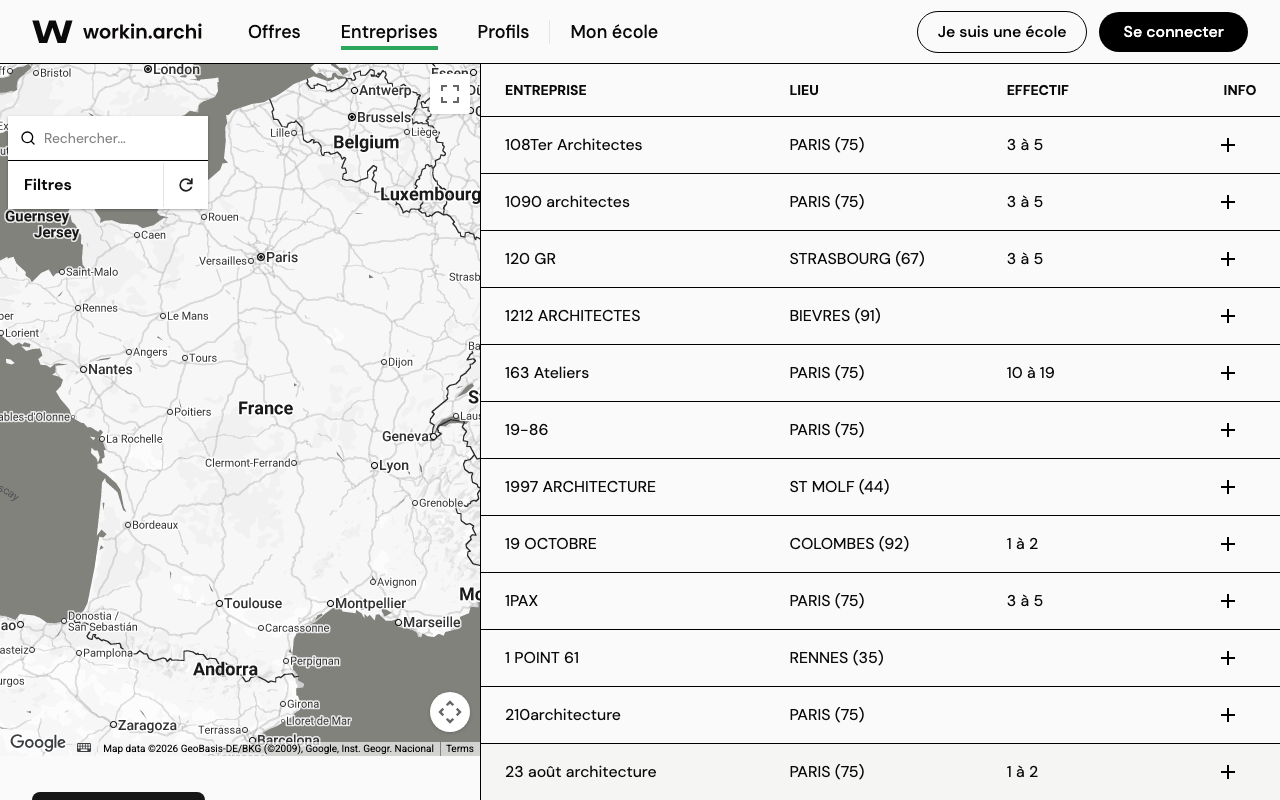 Company directory — architecture firms indexed nationwide, browsable without an account.
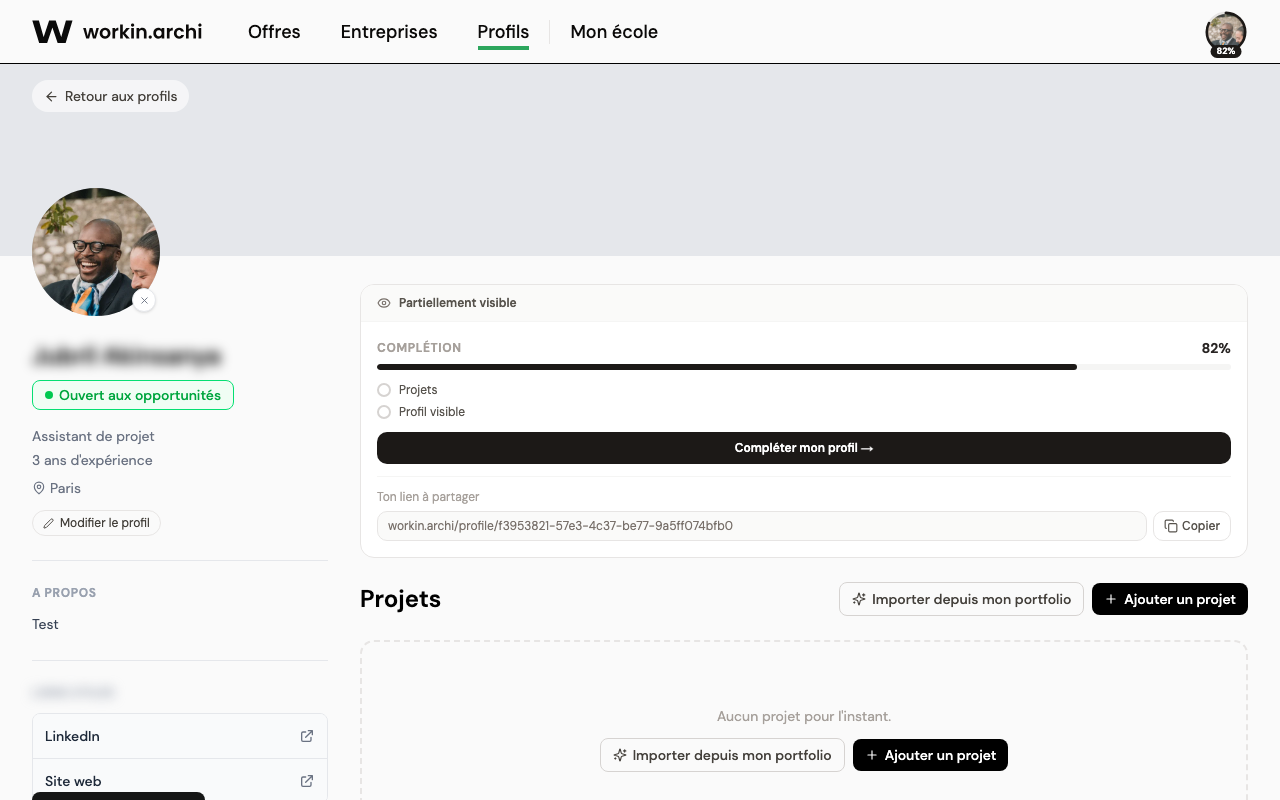 Public profile — my own profile, mid-completion (82%): the shareable link, the visibility toggle, and the portfolio-import CTA all live on this one screen.
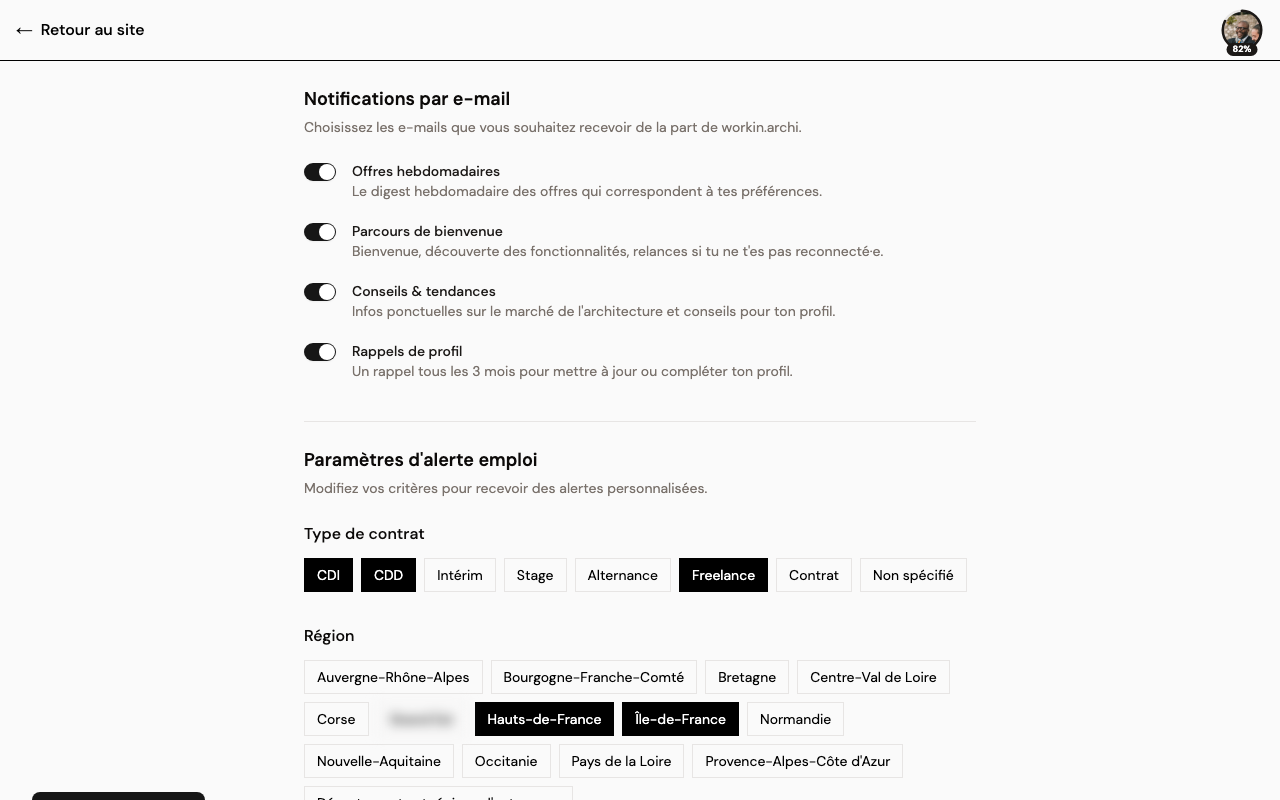 Account settings — granular email notification controls plus job-alert criteria (contract type, region): the retention machinery behind the scenes.
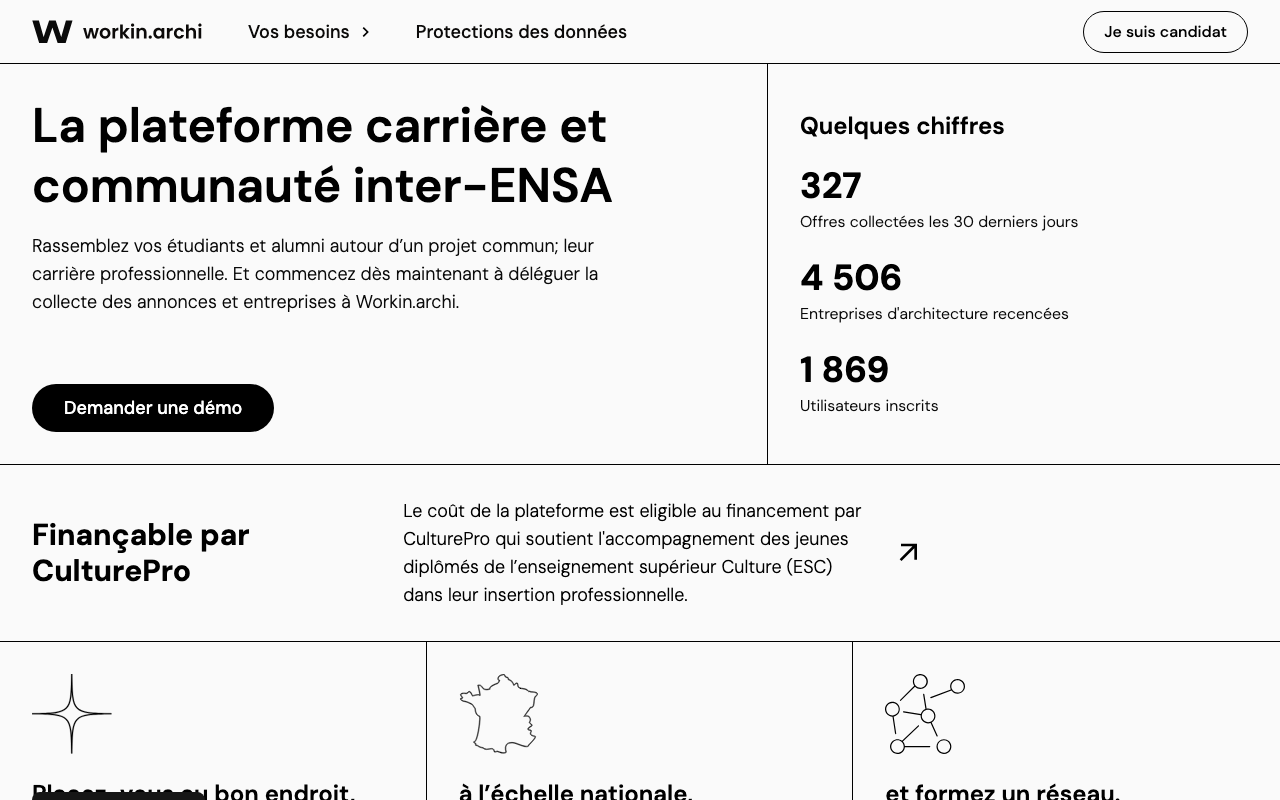 School landing page — the pitch to schools: delegate job/company collection to workin.archi and unlock the alumni network.
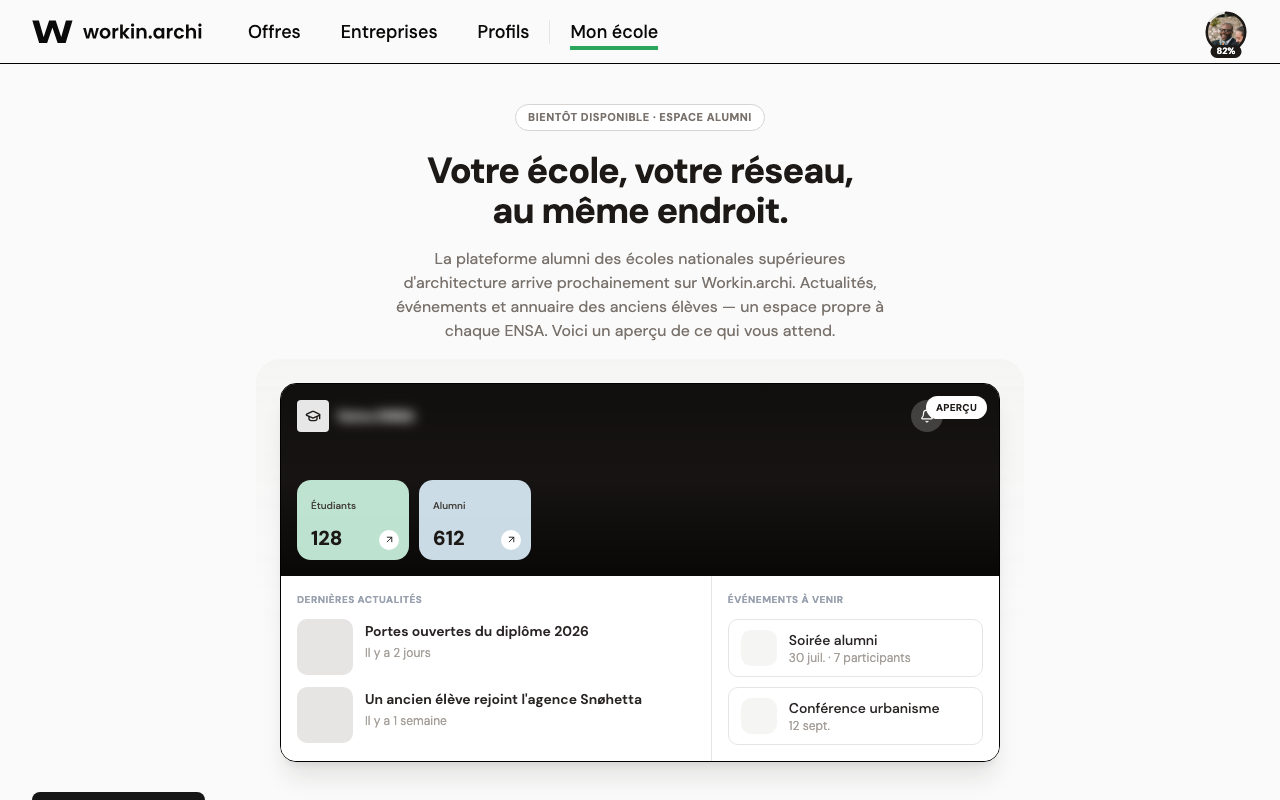 Alumni / "Mon école" — a preview of the upcoming inter-school network, shown here to a candidate account rather than a school admin.
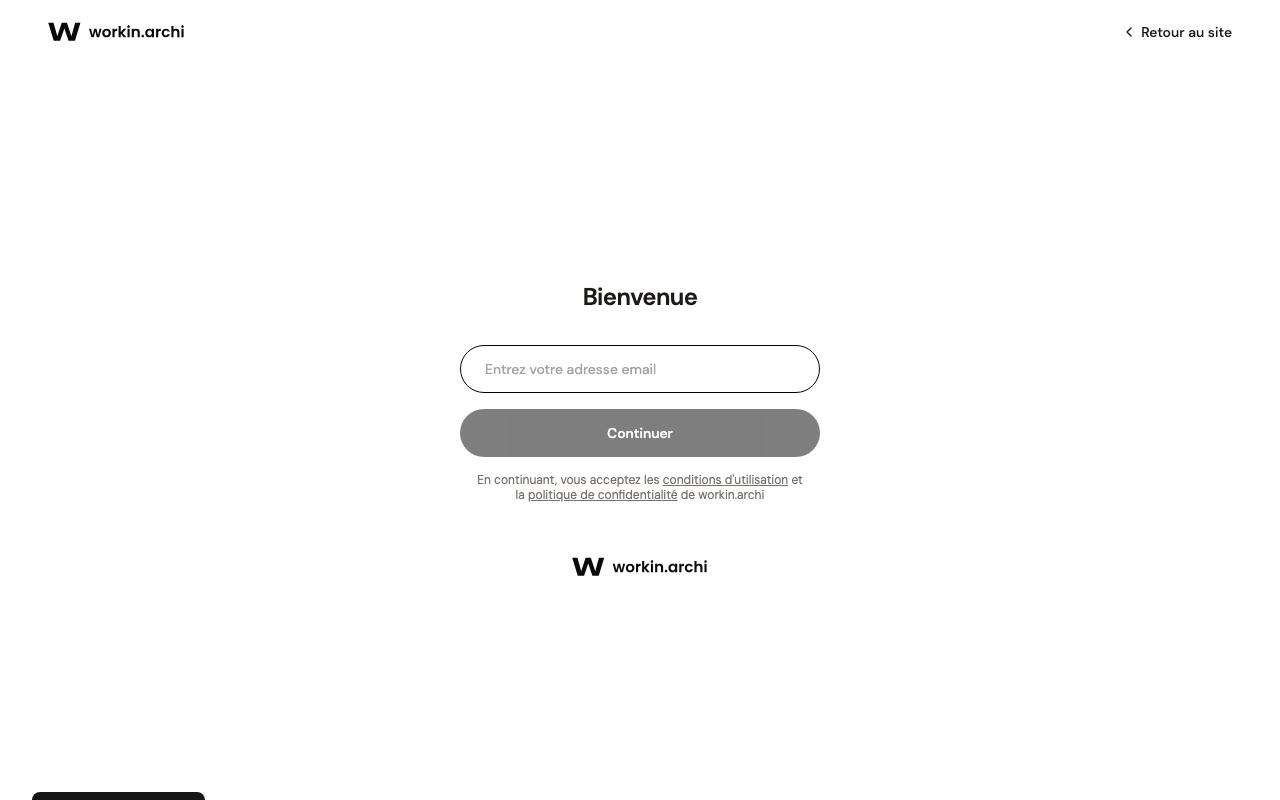 Login — the single, passwordless entry point shared by candidates, recruiters, and school admins.
Strategic moments
Betting on re-engagement rather than on-site retention. A job marketplace has a naturally low visit frequency — people don't job-hunt every day. Rather than investing only in features to keep users on the site, I built a whole email re-engagement engine: profile-completion reminders, a weekly job digest, win-back emails for dormant accounts. That's a deliberate tradeoff: less effort on "retain the session," more effort on "bring them back at the right moment."
Importing an existing portfolio instead of building one from scratch. The most friction-heavy step for a candidate is documenting their projects. Instead of forcing a from-scratch creation flow, I built an import path that pulls in a portfolio that already exists elsewhere. The cost is engineering complexity; the payoff is removing the main activation blocker on a product where the portfolio is the core value.