My role: solo founder — product, design, and engineering end to end, running in production for a real business.
The product
The Idée Paris CRM is an internal tool for an event venue business (the Château and the Orangerie de Grosbois) that covers the full customer lifecycle: lead intake, quoting, contracts, invoicing, payments, guest lodging, staff scheduling, and communication. It replaces a patchwork of manual tools (spreadsheets, scattered emails, phone calls) with a single system connecting the first public contact to sales, finance, and day-of-event operations. Its differentiation: it's purpose-built for a venue's real workflow (seasonal pricing, sales commissions, deposit/balance payment schedules), not a generic CRM.
Personas
- Sales staff — convert an inbound lead into a signed booking with a paid deposit as fast as possible, while tracking their own commission.
- Client (a couple or company organizing an event) — get a quote, sign, pay, and track documents and messages without having to call the venue.
- Admin / finance staff — manage invoices, payments, contracts, and documents reliably and auditably.
- Event-day staff — know their schedule on the day, without needing a full CRM account.
Key screens
| Screen | Audience | What it does | Product decision |
|---|---|---|---|
| Lead form | Client, no login | Submit an event request (dates, guest count, venue) | A public route decoupled from the CRM, so the first contact has zero authentication friction |
| Dashboard | Sales / admin | Overview of the event pipeline and open tasks | The dashboard reflects each deal's real urgency rather than a simple chronological list |
| Event record | Sales / admin | Manage a deal: status, dates, amounts, staffing | A central hub, since one event drives several downstream documents (quote, contract, invoice) |
| Quote / Invoice | Sales / finance | Generate, send, and track quotes, then invoices | Explicitly separating the quote (still negotiable) from the invoice (a firm commitment) — mirroring the real turning point in a sale |
| Client portal | Client, authenticated separately from the CRM | View and accept a quote, pay, see documents, message the venue | A deliberately distinct surface from the internal CRM: the client gets a limited, trust-appropriate view, while staff keep full control |
| Staff schedule | Event-day staff | View their personal schedule with no CRM account | Link-based access instead of a full account, avoiding provisioning one for every one-off staffer |
| Messaging | Sales / admin, client via the portal | Track a threaded conversation per client, including inbound emails | Turns email into a native CRM history, so no exchange gets lost outside the tool |
Screenshots
(live captures from the CRM; client names, contacts, and amounts tied to a specific event are blurred for confidentiality — everything else is the real interface)
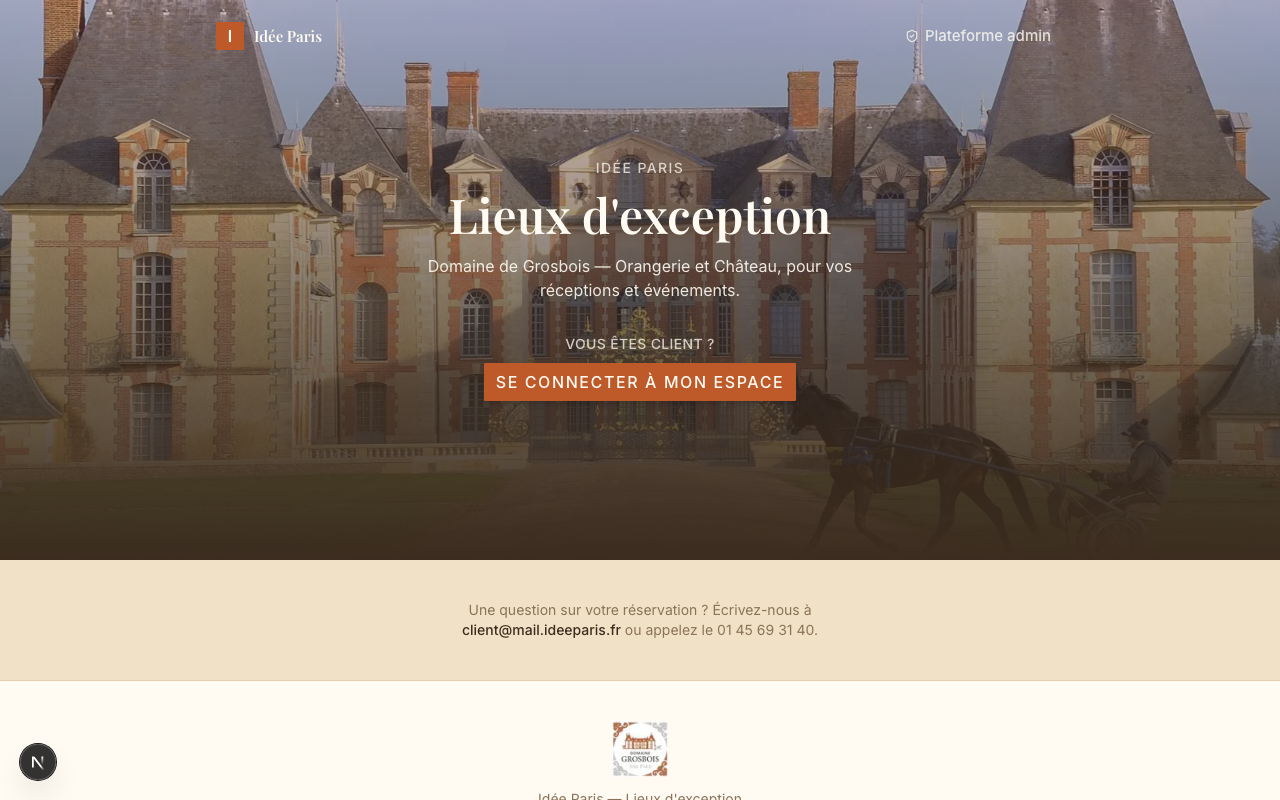 Landing page — the client entry point: sign in to their space, or contact the venue directly.
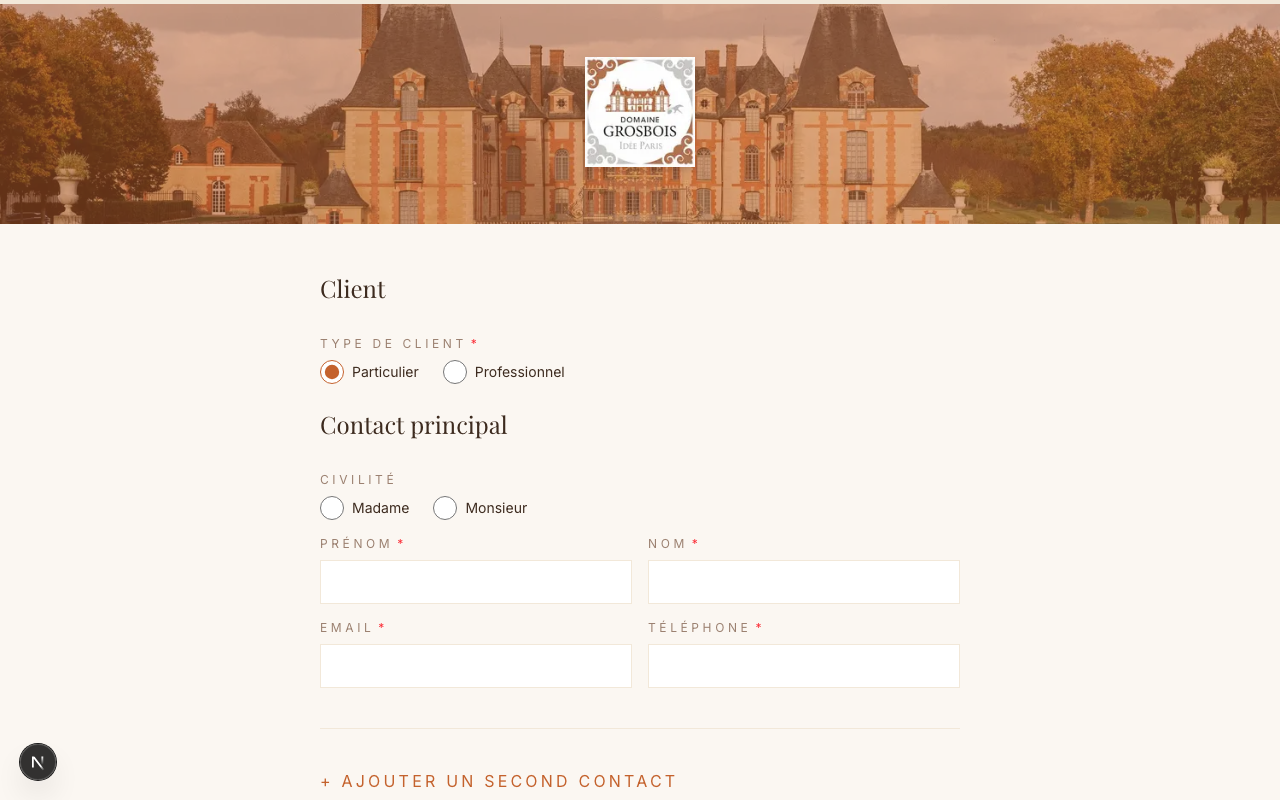 Lead form — the first public contact, capturing client type, contact details, and billing address with zero login friction.
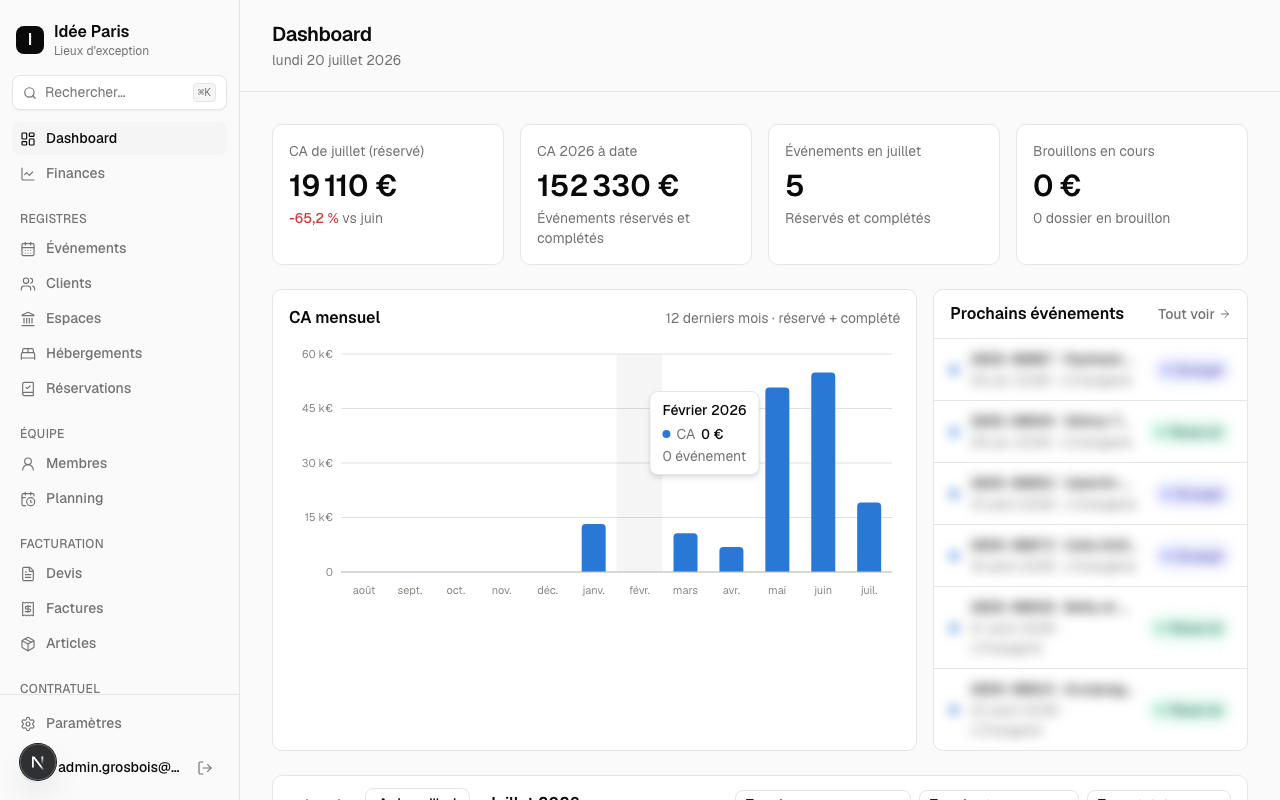 Dashboard — what a sales rep sees after logging in: monthly revenue booked, this month's confirmed events, and the upcoming-events list at a glance.
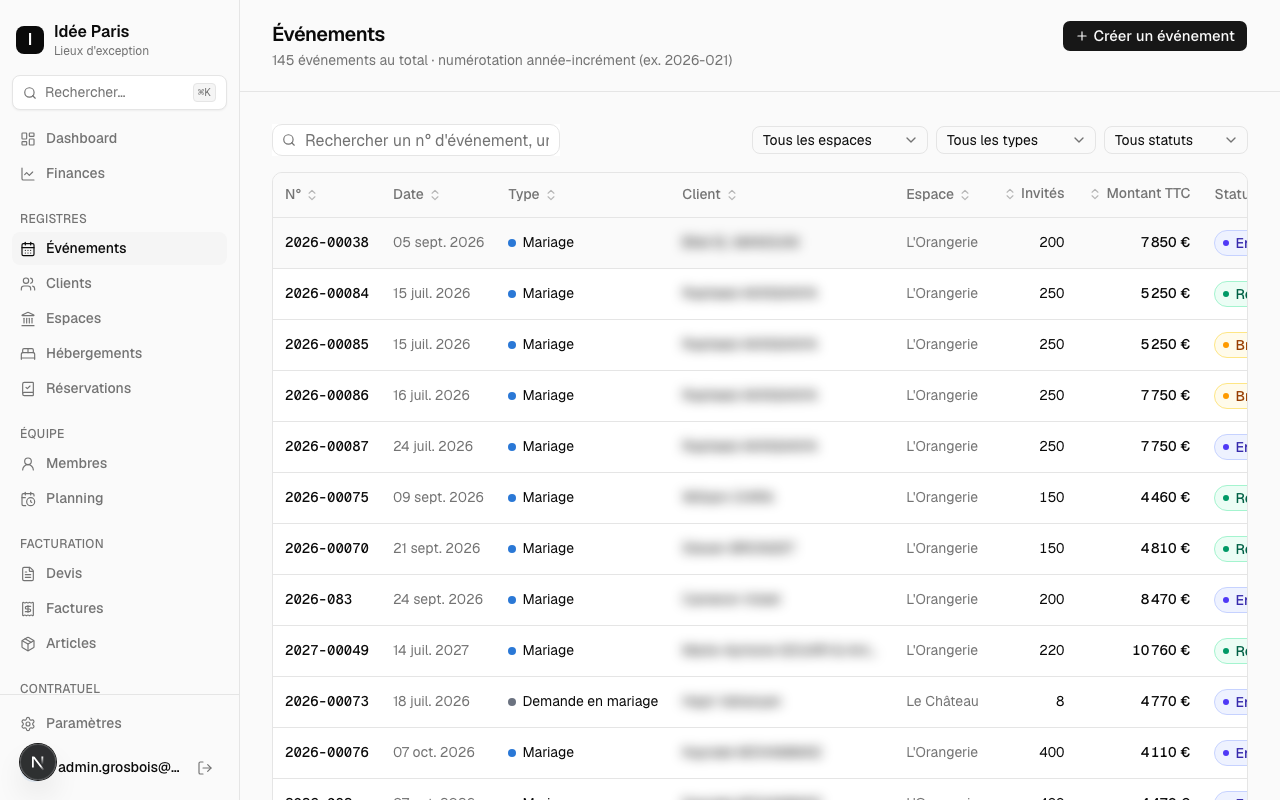 Events — every booking with its date, venue, guest count, and payment status.
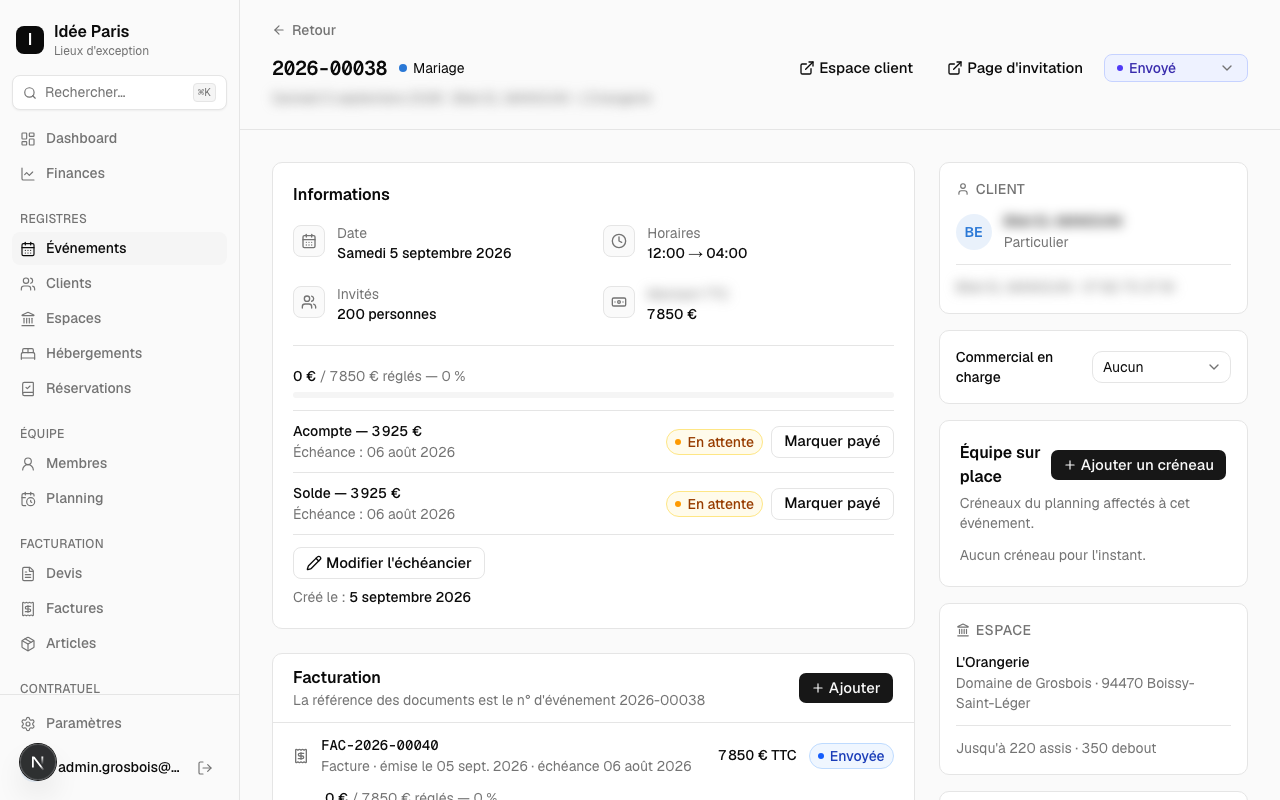 Event record — the deal's central hub: deposit/balance schedule, staffing, and linked invoice.
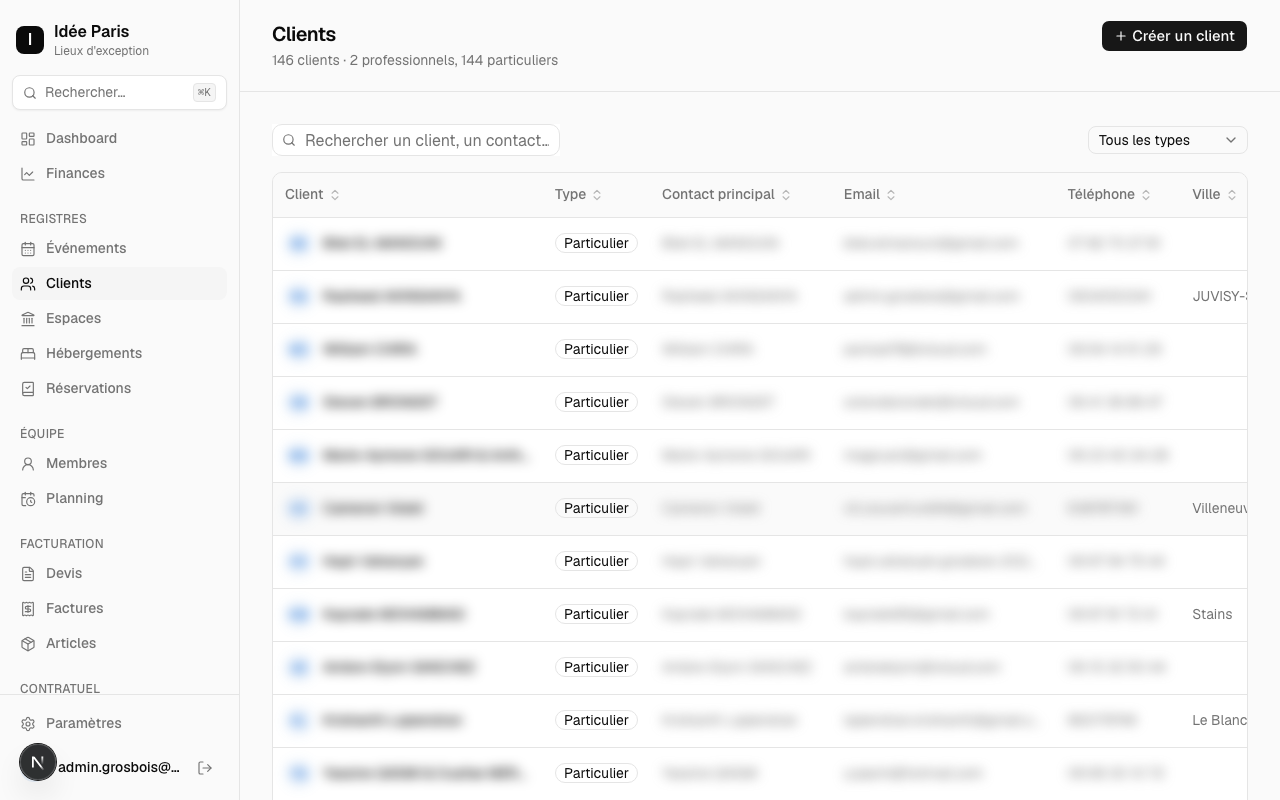 Clients — the full client directory with contact details, searchable and filterable by type.
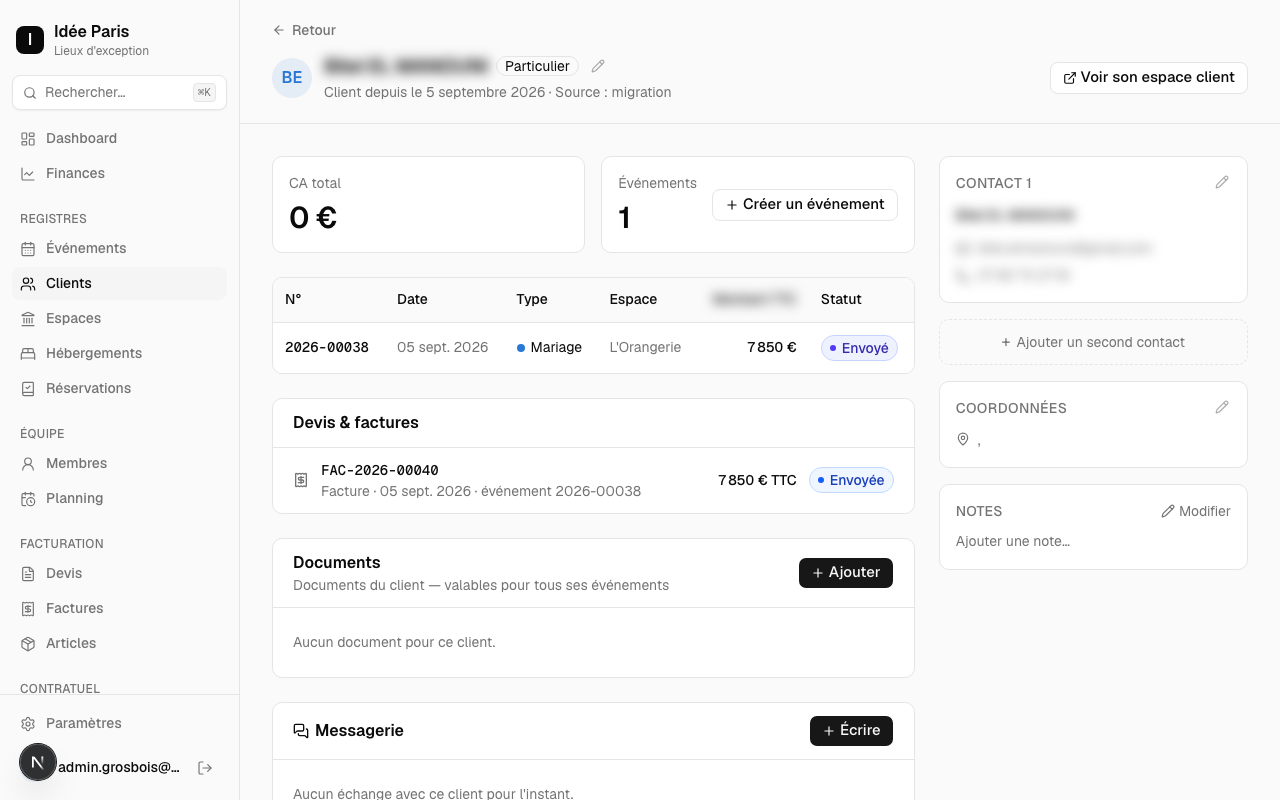 Client record — a single client's events, invoices, documents, and message history in one place.
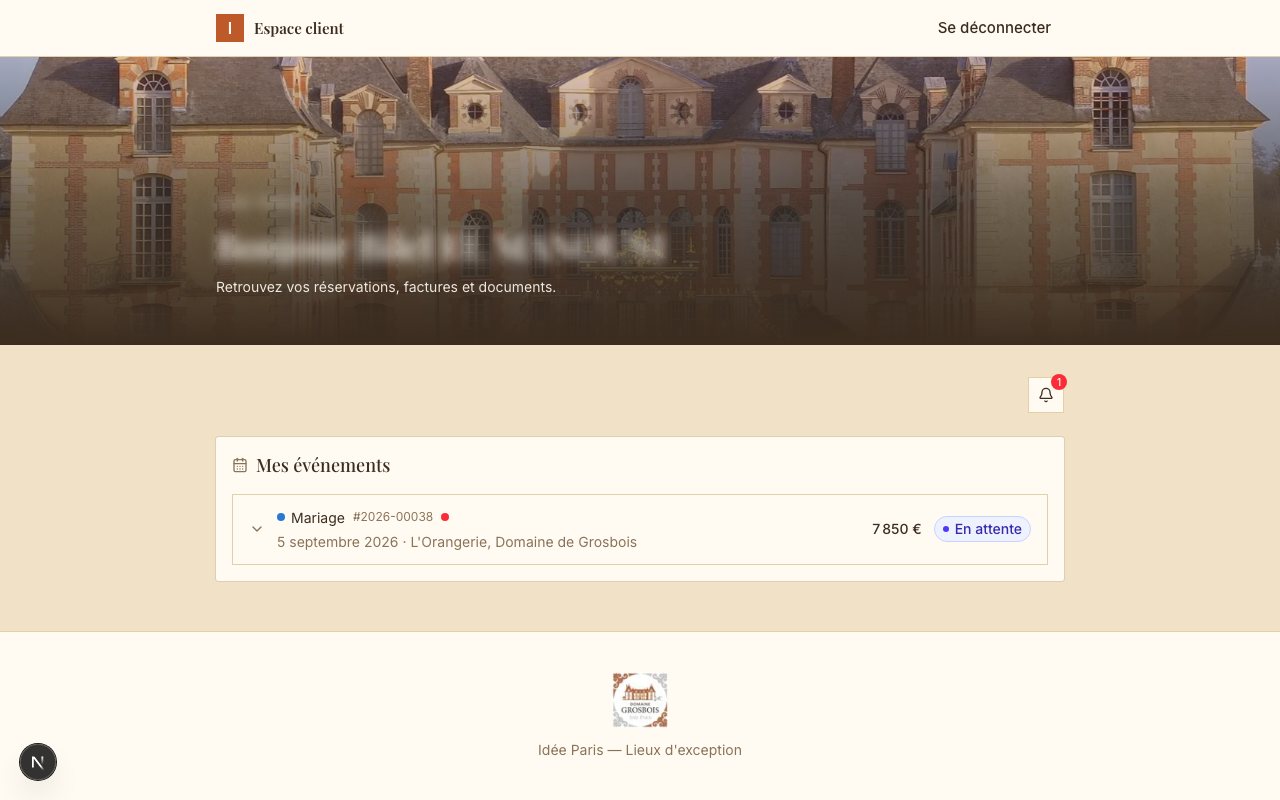 Client portal — the loop closes here: what the client themselves sees after logging into their own space — their event, status, and amount due.
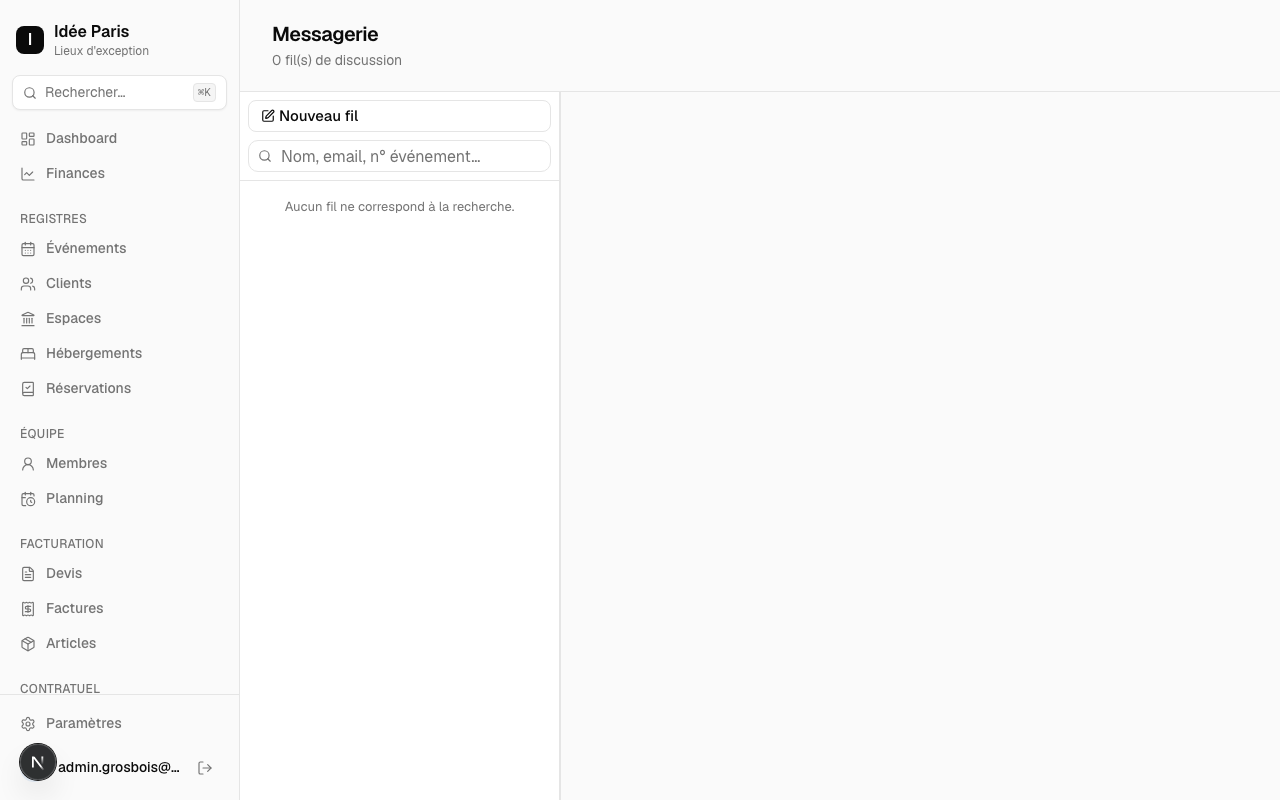 Messaging — a per-client conversation thread, shared between staff and the client portal (shown empty here, since this client hadn't messaged yet).
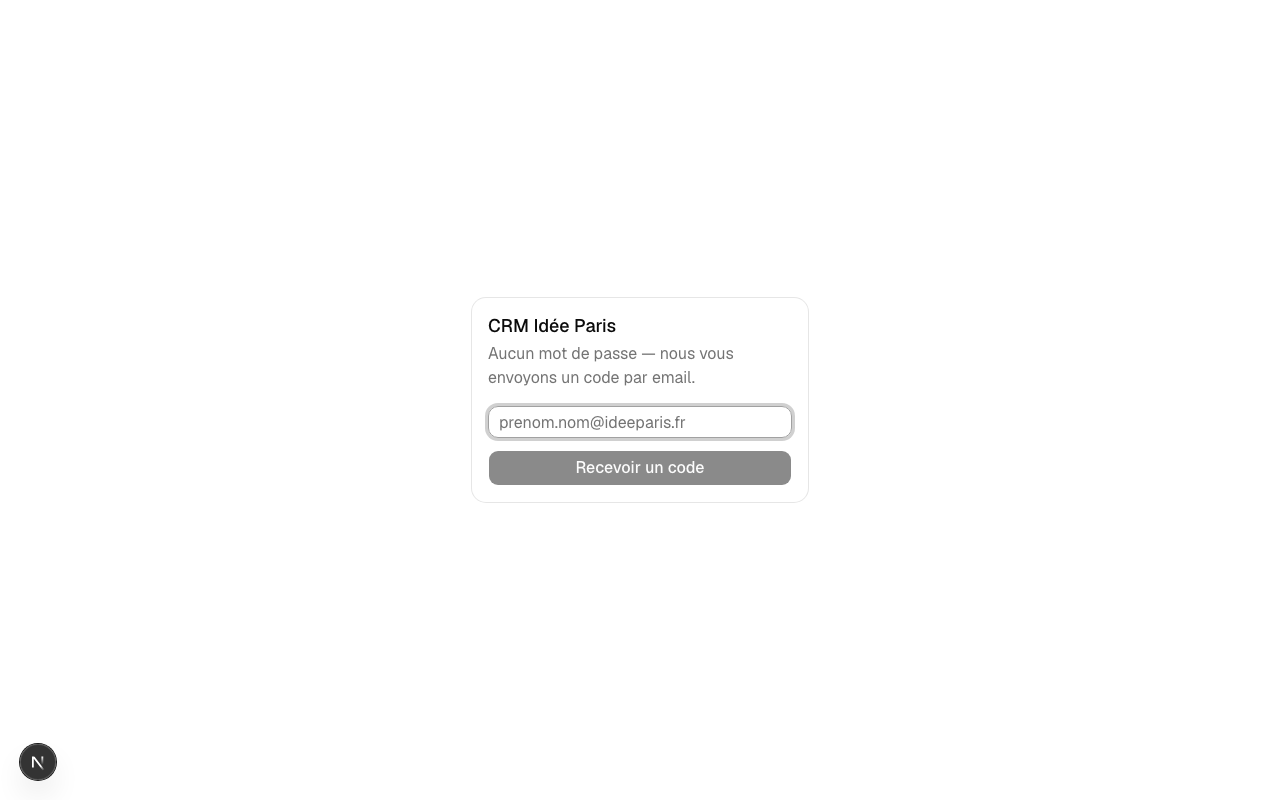 Login — the same passwordless, code-by-email access shared by sales, admin, and finance staff to get into everything above.
Strategic moments
Automatic vs. manual pipeline, depending on the venue. For some venues, an inquiry auto-generates the whole quote → contract → invoice chain; for others, every document is drafted by hand by a sales rep. This is a deliberate tradeoff between speed (less workload, but risk of committing the venue too early on complex deals) and control (safer, but slower) — and I chose to encode it per venue rather than force one mode across the whole business.
A commission model that follows cash actually collected, not the signature. The commission model distinguishes three tiers: potential (deal not yet confirmed), near-certain (confirmed but unpaid), and attributed (actually collected), unlocked progressively as the deposit and then the balance are paid. This is a product decision that aligns sales incentives with the venue's real cash flow rather than the number of deals signed — preventing a rep from pushing bookings that never actually turn into revenue.